
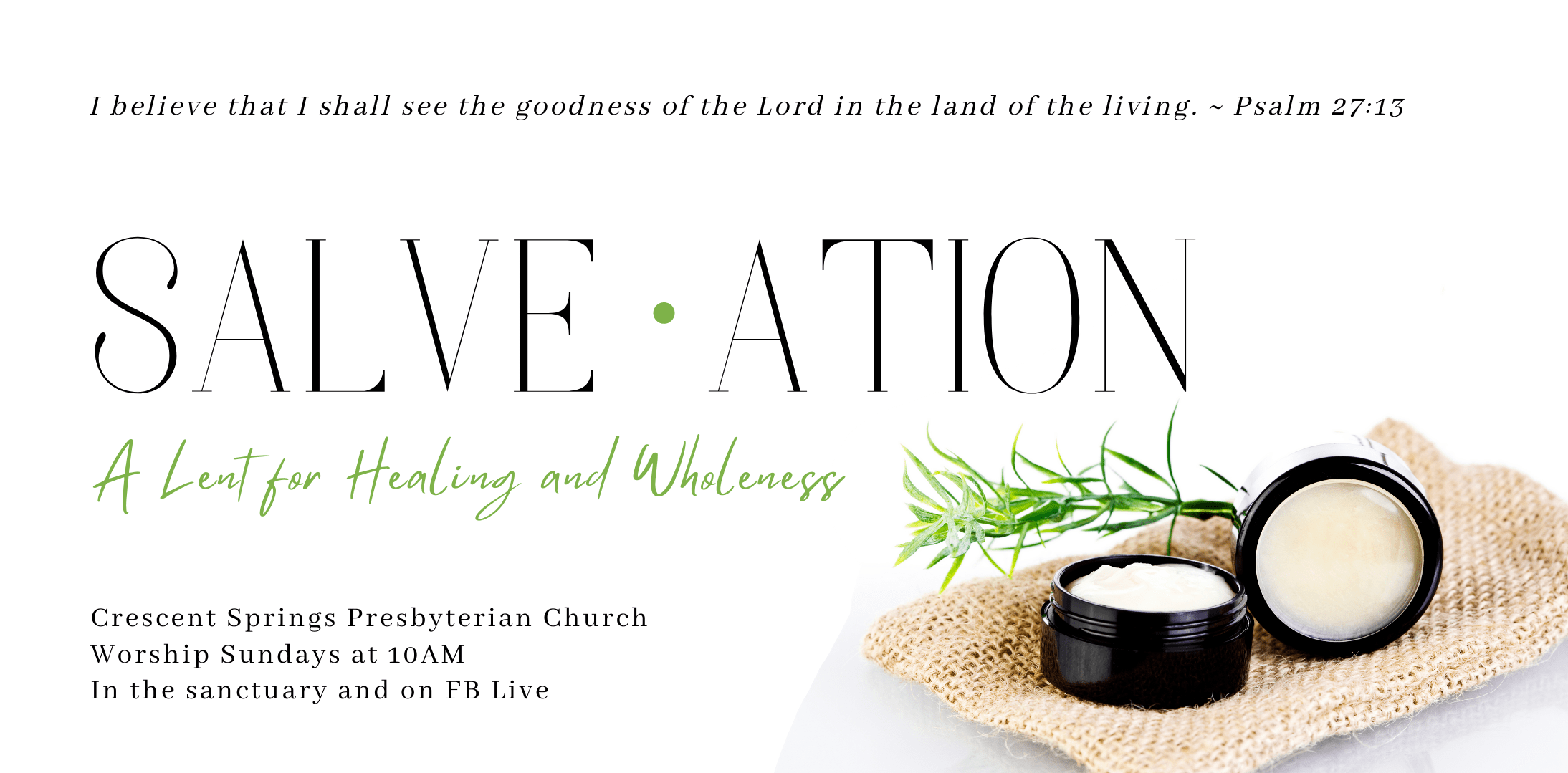
Feeling wounded, parched, or disconnected in this challenging season? This sermon series, which follows the Revised Common Lectionary for Lent Year C, offers a balm for the burned and burned out by drawing close to the grace of experiencing God. While “salve” and “salvation” come from different root words, the English confluence offers us a glimpse into the healing nature of the cross, which was offered for the healing of sins and the reconciliation of all people.
Week 1: “Refuge”
Scripture: Psalm 91:1-16
This psalm of trust offers powerful images of God as our shelter and refuge. In the thought-world of this poem, there is no danger God cannot rescue us from, no where we can go where God is not with us. Most of us are familiar with verses 11 and 12, which Satan quotes to Jesus in the desert to tempt him to test God’s love for him through reckless behavior. Jesus is wise enough to know that the language of this psalm was not meant to encourage us to endanger ourselves, but to give us a safe place from the dangers we are already surrounded by. It may be useful for the preacher to distinguish between escapism, which ignores and dulls pain but does not relieve or heal it, and refuge, which is a place where we can gather strength to re-engage the challenges of the world.
Spiritual Practice: Ask your congregation to close their eyes and imagine a refuge. What does it look like? Who is there? What do they feel while they are there? How can they find or create such places of refuge now?
Week 2: “Intimacy”
Scripture: Psalm 27
This psalm of longing acknowledges that, even if our faith is already sure and strong, we can always journey closer to God. It is easy to let our relationship with God, just like our relationship with others, fall by the wayside when we are stressed and busy. In such times,
“seeking God’s face” can feel like one more task on an endless to-do list, yet the psalmist reassures us that drawing close to God is how we find safety and rest. There are no deadlines or productivity markers on this journey–simply joy, melody, and strength.
Spiritual Practice: Ask your congregation to journal each day marking where they have sought or seen God’s face. The following week, ask a few people to share what they have found, and how the practice has affected their spiritual life.
Week 3: “Joy”
Scripture: Psalm 63:1-8
This psalm speaks directly to that parched feeling so many of us experience when we are asked to do too much with too little. In contrast to our overwhelm, God offers steadfast love and quiet shadow to rest in. God is a “joyful feast” for the soul. It is easy, however, to get caught up in serving others (especially in the church) and forget to ever sit down and feast ourselves. What would it take for us to tap into God’s joy again?
Spiritual practice: Lent often encourages us toward fasting and deprivation, but God is the joyful feast for a soul. Encourage your congregants to attempt a mindful eating exercise, where each bite is gratefully considered and savored. If food is a trigger, you might also consider other mindful exercises, like a body scan or sabbath evening.
Week 4: “Reconciliation”
Scripture: 2 Corinthians 5:16-21
Paul frequently interprets the cross as the impetus for our reconciliation with God. Atonement theories vary, but for this preacher, the cross is the undeniable sign of how far God will go to convince us we are forgiven and loved. That reconciliation with God, that moment we can finally believe we are worthy, spills out to others as well, as we become ministers of reconciliation across the world. Fractured relationships–whether between individuals or whole groups–can be a source of intense pain, anger, stress, and shame. How can we both follow Christ’s example of sacrificial love to those we have wronged, and stand fast in our own worthiness in our relationships with those who have wronged us? Is it possible to get to a new creation?
Spiritual Practice: Encourage your congregation to write a letter of reconciliation to someone you need to forgive, or want forgiveness from. Make sure to let them know they can use their own faithful discernment on whether or not to send it, but to use the letter as an aid to their prayers.
Week 5: “Outpouring”
Scripture: John 12:1-8
In this gospel vignette, Mary is criticized for pouring expensive oil out on Jesus’ feet. When we are overwhelmed or exhausted, it is easy–even sensible–to want to hoard things back for ourself. We become overly guarded with our time, our money, our compassion, our patience, our love. Yet Mary models for us the practice of pouring out everything we have on something that really matters. Sometimes our exhaustion comes not from doing too much, but doing too much that doesn’t matter. How can we discern what deserves our all?
Spiritual Practice: Have your congregation write down everything they need to do this week. Then ask them to mark those tasks in three ways: tasks that give them life, tasks that give others life, and tasks that give no one life but simply have to be done. Ask them to ponder what the ratios of those categories mean for them, and to think about how they might best direct their energies.
Week 6: “Shout Out”
Palm/Passion Sunday
Scripture: Luke 19:28-40
There are varying kinds of silence in our lives. There is the restful silence that restores us, the ordinary silence that stretches between activity and conversation, and there is also the oppressive silence that comes from fear and shame. On Palm Sunday, Jesus shatters that oppressive silence, giving his disciples–and the whole world, down to the very rocks–a voice. How can your congregation find their voice to claim and to offer God’s healing to the world?
Spiritual Practice: In groups of two or three, ask your congregation to share about a time when they were able to use their voice for good in their family, their workplace, or the world at large.
Week 7: “Alive”
Easter Sunday
Scripture: Luke 24:1-12 + 1 Corinthians 15:19-26
The resurrection story is the ultimate story of healing. Even after death–grisly, real, three-day old death–God can still lift Jesus and restore him to his friends and his path. It’s a powerful story, one Paul was desperate to share with the congregation at Corinth, who, like us, never saw the empty tomb with their own eyes. Paul outlines why Jesus’ resurrection is good news, healing news for us–because it was only the beginning. Paul insists that the living Christ will bring each of us life as well, and then will take on every death-dealing power in the world until all that’s left is us and God. This story of hope can encourage us to be part of God’s work, sharing salve-ation–healing of the heart, body, mind, and soul–with all we come in contact with.
Spiritual Practice: Following in the work of Brene Brown, challenge your congregants to change one hopeless story they tell themselves (you might prompt them to think about the economy, family relationships, their self-worth, political realities, etc.). Ask them to rewrite that story with God as the co-author. How would God write the end of our stories?
Ministry Resources
Salve-ation Liturgy
Salve-ation Graphics (editable Canva templates)
Discover more from Deep Well Worship
Subscribe to get the latest posts sent to your email.


2 thoughts on “Salve-ation: A Lent for Healing and Wholeness”